
GAABS Blog
BeSci News, Insights and Updates
Sharing the insights, news and updates to support behavioural science practitioners in solving real-world problems.
Improving Decision Quality in Co-Design Workshops
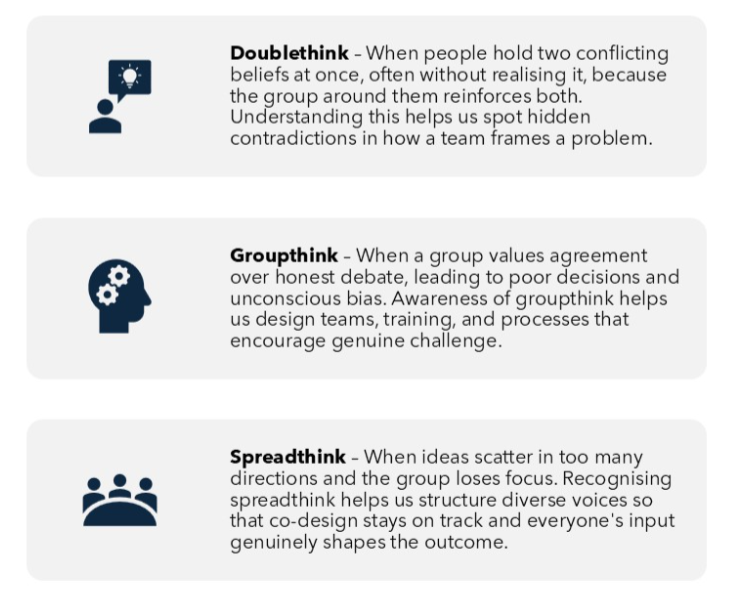
When people hear ‘co-design,’ they sometimes picture a friendly workshop and a wall of sticky notes. That can be part of it, but co-design is more specific, it’s a structured way of making decisions about services with the people who use and run them.
The promise is better ideas grounded in real experience. The challenge is that group dynamics can quietly distort what the group ‘decides,’ which is why how we facilitate co-design matters as much as who is in the room.
Your Tough Questions about Decision-Making in the Workplace
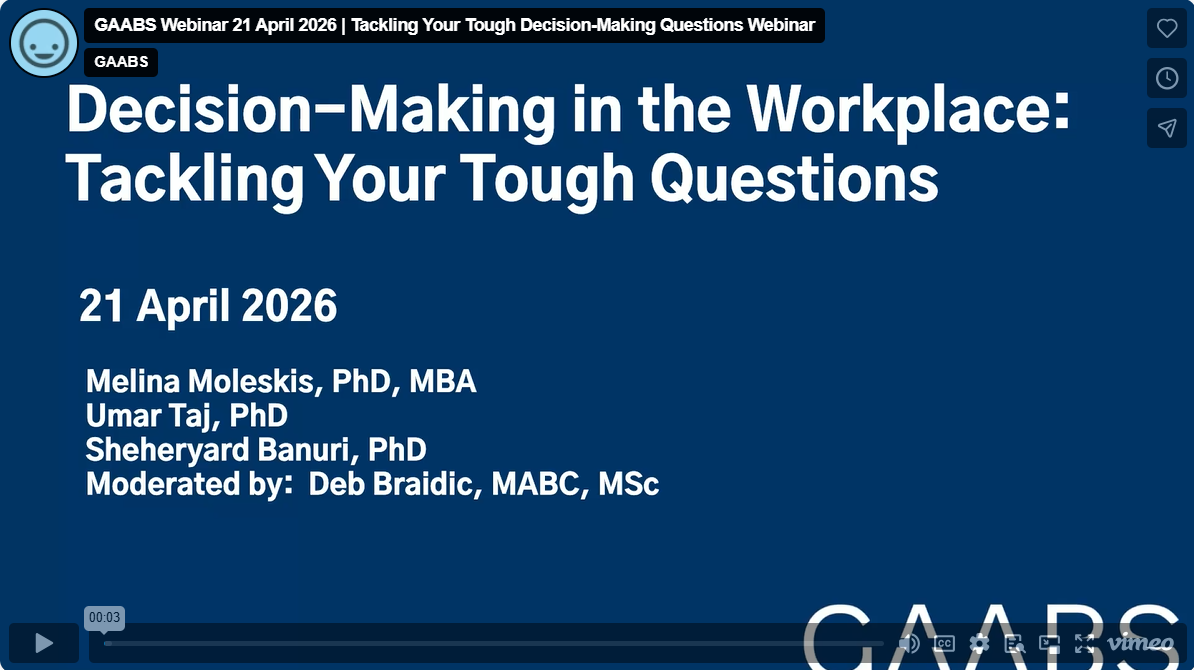
What do you say to an executive who truly believes that their organisation is making great decisions now and who is about to issue a hard pass on your offer of taking a look at decision-making in your workplace? This is the question that GAABS wanted to tackle for its first webinar for 2026.
To start, we wanted questions that were derived directly from lived experience. No pre-judgments or baseless biases here. No, no. Just gathering some sharp-pointed arrows for you to place in your quiver. Where did we look? Well, of course, we looked to our brilliant study co-leads from our 2025 study on Decision-Making in the Workplace. Dr. Melina Maleskis, Dr. Sheheryar Banuri, and Dr. Umar Taj graciously agreed to serve as panelists. And they helped us source some of their favorite tough questions with us and shared their best answers.
Submit Your Article to GAABS’ Editorial Board
Find out more about the kinds of submissions that GAABS accepts for review.
GAABS works with an all-volunteer Editorial Board to surface information believed to be of value to practitioners of behavioural science, but makes no warranties about the accuracy, completeness, or reliability of published content. Views expressed and representations related to data, findings and case studies are solely the responsibility of individual authors.